Announcing the Renewal Round
A new portfolio of 12 projects are set to receive funding through the Cambridge Conservation Initiative’s Collaborative Fund for Conservation. Bringing together partners from across the CCI network, the projects aim to deepen understanding of biodiversity challenges and foster collaboration across disciplines and institutions. Each project contributes to building knowledge, partnerships, and practical approaches to protecting and restoring biodiversity in diverse contexts.
These projects are the latest tranche to receive support through the Collaborative Fund. Launched in 2009, the fund was established to overcome a significant barrier to cross-institutional and cross-disciplinary working, namely the lack of accessible funding to initiate such collaborations. Since the fund’s inception it has supported 76 projects, dispensing over £4 million and catalysing some of CCI’s most influential collaborations.
Professor Melissa Leach, CCI Executive Director and Chair of the Collaborative Fund Selection Panel, said, ‘The Collaborative Fund is one of the most valuable collaborative enabling mechanisms created by CCI; it has been described as the glue that enables people and institutions to come together across divides they have been unable to bridge before. The diversity and range of projects supported through the Fund is phenomenal, and this year’s portfolio is no exception.”
“The diversity and range of projects supported through the fund is phenomenal, and this year’s portfolio is no exception.” – Professor Melissa Leach, CCI Executive Director and Chair of the Collaborative Fund Selection Panel
Among the initiatives in 2026 is a project that will bring together CCI partners to assess opportunities and risks of AI in conservation practice and operations and to develop aligned principles for responsible use of AI. Professor Chris Sandbrook, who co-leads the project, said, “Understanding the implications of AI is a huge challenge for conservation that cuts across multiple disciplines and perspectives. We are enormously grateful to the Collaborative Fund for enabling us to convene a group of CCI partners, computer scientists, technologists, AI engineers, and sustainability experts – which we couldn’t have done without this support.”
CCI is grateful to the Selection Panel for their thoughtful and thorough reviews of the submitted projects, and to the donors without whom the Collaborative Fund would not exist, particularly Arcadia and the Leventis Foundation.
For 2026 the Collaborative Fund introduced two new funding streams, designed to foster collaborations at an early stage of establishment (the Catalyst Fund) and to strengthen extant collaborations (the Impact Accelerator Fund). These two new funding strands will sit alongside a funding stream that continues to champion collaborative projects delivered by collaborations between CCI partners (the Collaborative Projects Fund). These changes reflect lessons learnt about the conditions required for effective collaboration.
The full list of projects supported this year is as follows:
- Catalyst Fund (grants of up to £20,000 to support the start-up or early stages of collaborative initiatives)
- Catalysing CCI collaboration on Reducing Biodiversity Loss, Strengthening Agroecological Resilience and Enhancing Food Systems fosters cross-CCI collaboration on agroecology and biodiversity through mapping, workshops, and joint priority setting
- Socially Just Conservation in Liberia: Strengthening Collaborative Partnerships establishes a collaborative framework for conservation in Liberia, strengthening partnerships and integrating social science
- Developing a Collaborative Agenda for Sustainable Wildlife Use and Trade across CCI integrates fragmented knowledge on wildlife use and trade into a shared, actionable evidence base for better decision-making
- Framing Workshop to develop Guidelines for Regional Application of the Key Biodiversity Area (KBA) Criteria explores adapting the Key Biodiversity Areas (KBA) Standard to regional scales to strengthen national conservation engagement
- Impacts of pesticides on birds throughout the African-Eurasian Flyway: integrating science, policy and practice builds an Africa–Europe coalition to reduce pesticide impacts on biodiversity by identifying policy levers and research gaps
- The practical application of AI for conservation: Navigating Opportunities, Costs, and Trade-offs assesses opportunities and risks of AI in conservation and develops principles for responsible use
- From risks to recovery: delivering bespoke solutions to business biodiversity impacts enhances the IBAT platform with science-based recommendations to support business action for biodiversity recovery
- Cambridge ‘Nature City’ Collaboration develops a coordinated framework for city-scale nature recovery in Cambridge, linked to national strategies
- Collaborative Projects Fund (grants of up to £100,000 to initiate, grow or sustain CCI collaborations)
- Source to Solution: Stopping Illegal Killing and Taking of Birds (IKB) Driven by Hunting Tourism Through International Collaboration addresses illegal killing of birds through improved evidence, policy, and behaviour change interventions across borders
- Impact Accelerator Fund (grants of up to £20,000 to support existing CCI projects near completion or recently finished to undertake work to help secure further external funding)
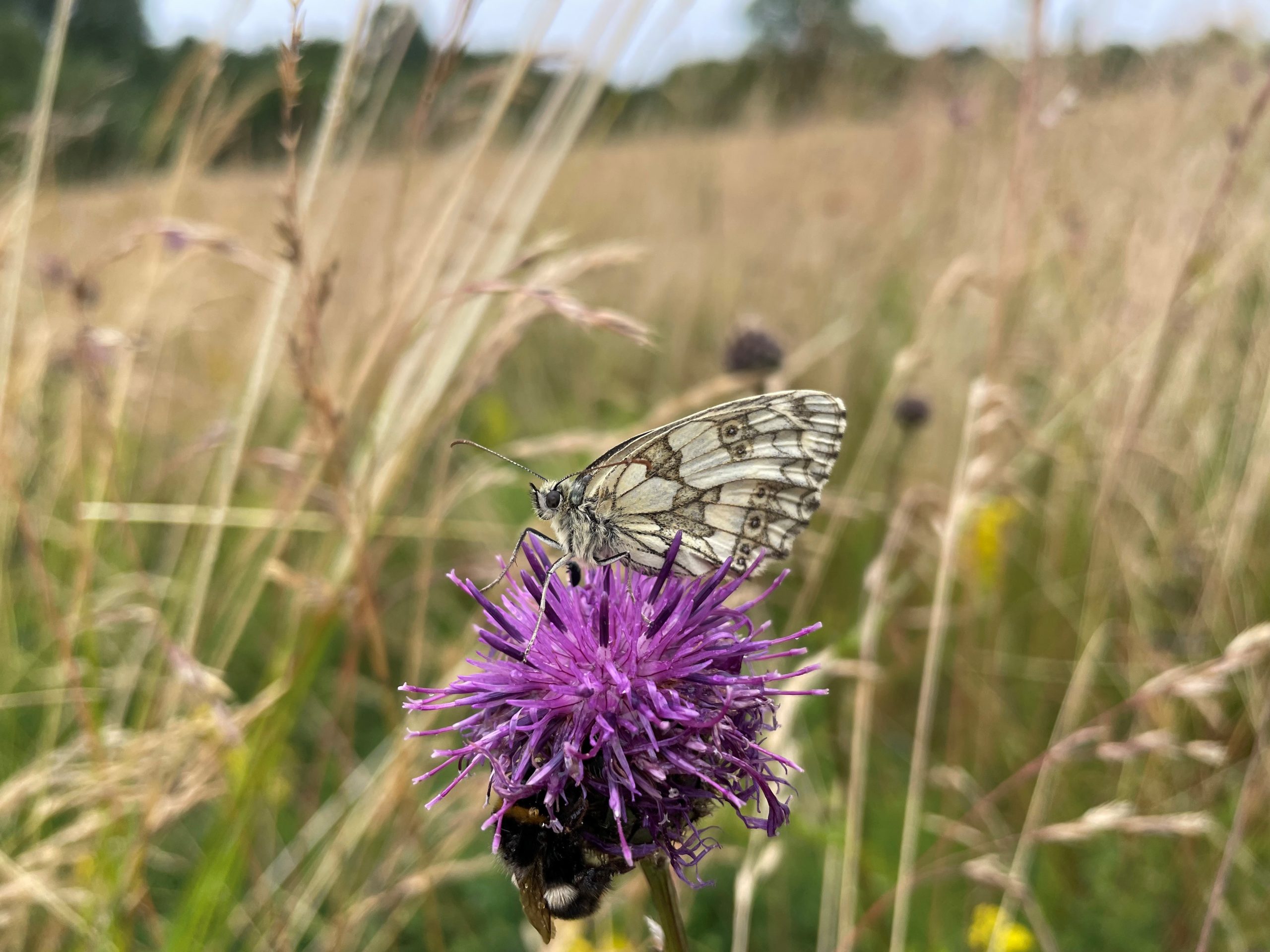
- Beyond Banking on Butterflies expands research and application of butterfly banks, including new trials and education-focused “mini banks”
- Reflecting and challenging patriarchy and harmful gender norms for strengthened rights-based approaches in conservation and restoration promotes gender-transformative approaches in conservation by addressing harmful norms within organisations and programmes
- A global Invasive Alien Species Management Platform: from promising concept to practical tool advances development of a global database and online portal for invasive alien species management data
Further updates on project progress and opportunities for engagement will be shared in the coming months.