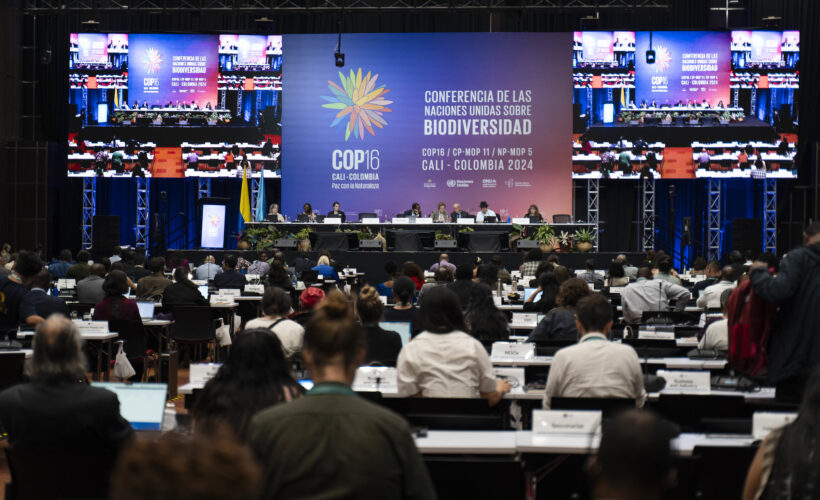
As the conservation community prepares for the seventeenth Conference of the Parties to the Convention on Biological Diversity (CBD COP17) in Yerevan, Armenia, CCI brought together experts and partners to discuss what COP17 needs to deliver for nature and people.
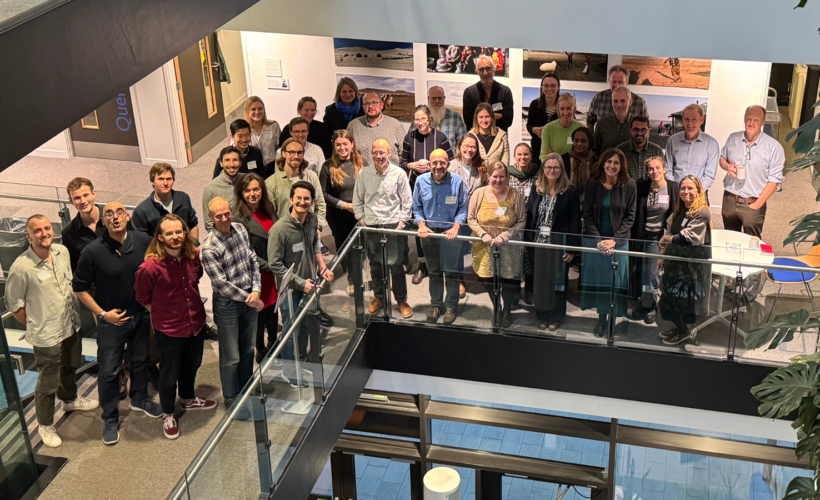
Held on 1 October at the David Attenborough Building and online, CCI In Conversation: What to Expect at CBD COP17 explored how global biodiversity commitments can be translated into action, from strengthening national monitoring systems to mobilising finance and supporting inclusive conservation.
Melissa Leach, Executive Director of CCI, chaired the panel, which featured Natasha Ali, Head of Policy Support at UNEP-WCMC; Catherine Weller, Director of Global Policy and Government Relations at Fauna & Flora; Dr Nina Seega, Director of the Centre for Sustainable Finance at the Cambridge Institute for Sustainability Leadership (CISL); and Chris Sandbrook, Director of the Cambridge Conservation Research Institute.
With the Kunming–Montreal Global Biodiversity Framework’s 2030 deadline approaching, the panel considered how COP17 could accelerate implementation at a time of growing pressure on international cooperation. Several themes emerged from the discussion.

- Turning global ambition into national action: Natasha Ali outlined the significance of the first global review of progress towards implementing the framework. She cautioned that the evidence remains incomplete as countries continue to develop their plans and monitoring systems. Nevertheless, the emerging picture points to a gap between national commitments and global ambition, alongside barriers including limited resources, capacity and coordination. The review should help identify shared challenges and support countries’ priorities, rather than rank their performance. Conservation organisations have an important role in strengthening the links between data collection, evidence and decision-making.
- Getting finance flowing: Nina Seega highlighted the gap between establishing funding mechanisms and securing the contributions needed to make them effective. Discussion covered the Global Biodiversity Framework Fund, the Tropical Forest Forever Facility and the Cali Fund, which is intended to support benefit-sharing from the use of digital sequence information on genetic resources. Reforming subsidies that harm biodiversity and the developing debate around biodiversity credits were also identified as areas to watch. Catherine Weller called for concrete UK funding commitments for nature, while Seega emphasised the importance of showing businesses and financial institutions how nature relates to their own risks and opportunities.
- Putting rights and inclusion at the heart of delivery: Chris Sandbrook highlighted weaknesses in national commitments to the social dimensions of Target 3, often known as ‘30 by 30’. He argued that progress must encompass equitable governance, sustainable use and respect for the rights of Indigenous Peoples and local communities, alongside the extent of areas conserved. The discussion also explored tensions between government-led reporting and conservation undertaken by communities and other non-state actors. Fauna & Flora colleagues described plans to demonstrate the Inclusive Nature Action Principles in practice, including work on barriers that women and Indigenous Peoples face in accessing finance.

- Connecting climate and nature: An audience question prompted discussion of how climate change affects biodiversity ambitions. Chris Sandbrook called for closer integration of responses to the two crises, particularly when considering global priorities beyond 2030. Nina Seega offered a different strategic perspective: in the current political environment, separate policy tracks can sometimes create space for financial institutions to act on nature when climate discussions are more constrained. Participants also highlighted efforts to improve coordination between environmental agreements and reduce the burden of implementation on countries.
- Sharing practical solutions and building partnerships: Catherine Weller emphasised the value of COP17’s side events as opportunities to share research, tools and approaches that others can adopt. Examples included Armenian Georgian cooperation on illegal wildlife trade and an inflatable art installation designed to illustrate how invasive alien species displace native wildlife. Contributions from the wider CCI community highlighted plans for biodiversity law training, work linking global targets with domestic legislation, action on invasive species, and youth participation. Together, these illustrated the range of ways in which partners can contribute beyond formal negotiations.
Asked what would make COP17 a success, panellists pointed to stronger contributions to nature finance, concrete UK commitments, progress on forest funding and completion of the negotiating agenda. Questions remained about how the proposed “Yerevan Pathways” would turn the global review into practical action.
CCI will help share partners’ activities and insights via the website and on LinkedIn and Instagram, connecting those attending in person with the wider community. Partners are invited to share reports, side events, blogs and updates with the CCI team, helping the partnership exchange knowledge and support action for nature and people.